
Phase 2 Environmental Site Assessment in Houston, Texas


If your commercial property deal in Houston needs more certainty than a Phase 1 Environmental Site Assessment can provide, Phase 2 is the next step. A Phase 2 Environmental Site Assessment Houston Texas project is scoped to confirm whether contamination exists and what areas are affected. It also defines how far contamination may spread, so lenders and buyers can make safer decisions about financing, redevelopment, or new construction.
In Houston, Texas, Phase 2 is not automatic. It usually follows Phase 1 findings, site history, and the level of risk detail required for underwriting or redevelopment planning. Many buyers also compare local providers because the investigation plan, fieldwork quality, and report defensibility can make or break a transaction. This guide explains what Phase 2 includes, how it works on real Houston properties, what affects cost and timing, and what credentials and deliverables to ask for before you hire.
Table of Contents
Jump to the section you want to read, or scroll down to read the full article.
❶ | How Phase 1 results point to Phase 2 work on Houston commercial properties › Phase 2 Environmental Site Assessment work typically starts when Phase 1… |
❷ | What a Houston Phase 2 Environmental Site Assessment includes and how field sampling works › Phase 2 fieldwork usually involves targeted soil borings, sampling, and… |
❸ | How Houston lenders and buyers decide whether Phase 2 is “enough” for their decision › Houston stakeholders judge “enough” Phase 2 work by whether it supports the… |
❹ | Why Phase 2 timelines in Houston change when field conditions and records are mismatched › Phase 2 does not always move faster than Phase 1. |
❺ | Common Phase 2 misconceptions that cause rework during Houston due diligence › One common misconception is that Phase 2 always “confirms everything” from a… |
❻ | You should compare providers by how they build the Phase 2 work plan from… |
❼ | Houston scheduling and access realities that shape Phase 2 fieldwork strategy › Phase 2 planning in Houston must account for local weather patterns and safe… |
❽ | Commercial property histories in Houston that most often trigger Phase 2 investigation › Phase 2 is most likely when a property’s commercial history suggests plausible… |
❾ | Cost and timeline expectations for Phase 2 Environmental Site Assessment in Houston, Texas › Phase 2 cost in Houston varies mainly with how much sampling and analysis is… |
❿ | Credentials and deliverable quality checks that signal a trustworthy Phase 2 provider › One of the most important trust signals is whether an appropriately qualified… |
⓫ | How to request a Phase 2 quote and avoid scope rework for your Houston transaction › A smooth quote request starts with sharing your Phase 1 Environmental Site… |
⓬ | |
⓭ | Conclusion: scoping Phase 2 to match your Houston decision helps reduce risk › Phase 2 Environmental Site Assessment in Houston, Texas is about resolving… |
Need a Commercial Site Inspection? Get a detailed report from experienced professionals. |
How Phase 1 results point to Phase 2 work on Houston commercial properties
Phase 2 Environmental Site Assessment work typically starts when Phase 1 identifies recognized environmental conditions or important uncertainties. “Recognized environmental conditions” are signals from records, interviews, and site observations that contamination may be present. Phase 1 may also flag data gaps where sampling is needed to reduce lender and buyer risk.
Phase 2 is designed to answer the questions Phase 1 cannot close. Instead of only describing likely risk areas, Phase 2 characterizes whether contamination exists. It also helps define vertical and horizontal extent, so stakeholders can plan construction, tenanting, or reuse with fewer unknowns.
In Houston, site goals often shape the Phase 2 scope. For example, a refinance may need risk characterization for underwriting. A ground-disturbing redevelopment project may need more detail to support construction planning. Even though both use “Phase 2,” the deliverables can differ based on the decision being made.
Another nuance is that Phase 1 results can be incomplete for practical reasons. Sometimes access limits, utilities, pavement, or shallow subsurface complexity restrict sampling. When that happens, Phase 2 may focus on decision-critical areas rather than the entire site footprint. A common mistake is assuming a full property investigation is always the default. In reality, the scope should match what is needed to support your specific transaction and end use.
What a Houston Phase 2 Environmental Site Assessment includes and how field sampling works
Phase 2 fieldwork usually involves targeted soil borings, sampling, and sometimes groundwater sampling if conditions warrant. The goal is to generate laboratory-tested data that can confirm or refute the Phase 1 concerns. For commercial sites, investigators also document boring locations, depths, and subsurface conditions that affect interpretation.
Investigators typically choose sampling locations based on Phase 1 hot spots. These can include suspected source areas like equipment zones, staining, former release areas, or places tied to historical operations. They may also look for preferential pathways such as utility corridors or areas where liquids could have migrated.

If groundwater is encountered at planned depths, Phase 2 may include groundwater sampling. However, groundwater is not guaranteed on every site. When groundwater is not present or is not accessible, the scope must adapt. That is why a well-designed work plan matters, and why the sampling plan should be updated if field conditions differ.
Finally, data defensibility is central to Phase 2. Chain-of-custody documentation, proper decontamination practices, and accurate boring logs help stakeholders trust the numbers. If sampling integrity or QA/QC is weak, results can be questioned. That can lead to re-sampling and project delays during a closing or permitting window.
How Houston lenders and buyers decide whether Phase 2 is “enough” for their decision
Houston stakeholders judge “enough” Phase 2 work by whether it supports the decision they must make. A lender often needs risk characterization that is credible for underwriting. A buyer planning reuse or construction needs enough detail to evaluate exposure pathways and design constraints.
“Enough” work is often fit-for-purpose. If your project is lease-up, the focus may be on risks relevant to soil contact, vapors, or construction interfaces. If you plan intrusive work, boundaries may need refinement to guide excavation planning and permitting coordination. In both cases, the scope should trace back to what Phase 1 found and what risk pathway matters most.
In many Houston transactions, records review supports the sampling strategy. Phase 2 planning can incorporate Texas Commission on Environmental Quality (TCEQ) information and relevant federal EPA record sources used during due diligence. These records can point to prior USTs and reported releases, which helps target areas likely to matter. A key nuance is that regulatory closure and underwriting support are not always the same goal. Phase 2 scope may be narrower when the objective is transaction risk characterization, not agency case closure.
A common misconception is that “more samples” automatically equals better decisions. However, an oversized scope without a clear decision pathway can add cost without improving usefulness. Disagreements also happen between buyers and lenders. Buyers may want maximum delineation. Lenders may prefer staged sampling tied to milestones, such as confirmatory sampling before intrusive construction starts.
Why Phase 2 timelines in Houston change when field conditions and records are mismatched
Phase 2 does not always move faster than Phase 1. Even when Phase 2 is smaller in scope, mobilization, drilling, and lab turnaround can extend the schedule. In Houston, heat and intense summer storm seasons can also affect safe field operations and access.
Several factors can shift timelines. Sampling depth and number of borings can increase field duration. Groundwater sampling can add complexity, especially when groundwater conditions vary across the site. In addition, labs may require extra time for data validation and QA/QC, especially if initial results show unexpected contamination.
Another delay driver is incomplete planning inputs. Access and logistics matter in Houston commercial districts where pavement and subsurface utilities can constrain boring locations. If the property boundaries for boring advance are not clear, teams may need rework. Also, if stakeholders change the end use after Phase 1, the Phase 2 scope may need to be revised.
Some delays are preventable with better scoping. Ask providers to describe draft deliverables and the decision milestones that protect your closing or permitting dates. A realistic schedule should include time for sampling, lab analysis, validation, and a draft review cycle before final reporting. Without that, “final report by X date” can be misleading for real projects.
Common Phase 2 misconceptions that cause rework during Houston due diligence
One common misconception is that Phase 2 always “confirms everything” from a single boring. Contamination can vary across depth and location. If the sampling plan is oversimplified, it may miss localized source areas or migration trends.
Another frequent issue is treating Phase 2 as a fixed package. In reality, scope should respond to new field information. If staining appears outside the planned area, or if subsurface conditions differ, the provider should adapt the plan. When scope is not updated, the report can end up with unclear conclusions that do not support the transaction decision.
Documentation is also where disputes start. Stakeholders often focus on lab numbers, but defensibility depends on field execution. If chain-of-custody forms are missing details, or if QA/QC procedures are not clearly documented, results may be questioned. That can force re-sampling and create schedule risk right when lenders or closings need certainty.
An edge case in Houston is groundwater variability across storm periods. Heavy rain can change near-surface conditions and influence what is encountered during drilling. Therefore, providers should plan sampling to maintain consistent methods and interpret results in light of those conditions. The goal is clarity, not just sampling volume.
How to compare Phase 2 Environmental Site Assessment providers in Houston without getting misled by pricing
You should compare providers by how they build the Phase 2 work plan from Phase 1 and site constraints. Pricing can vary widely, so you must understand what is included. A low quote can still be expensive if it later requires add-ons for groundwater, additional analytes, or re-sampling.
First, look for providers that integrate records review into scoping. They should use relevant TCEQ and federal record sources to understand where the highest decision value lies. Next, evaluate whether the provider uses staged or scoped approaches when appropriate. Staged work can align with lender milestones by confirming key boundaries before additional delineation.
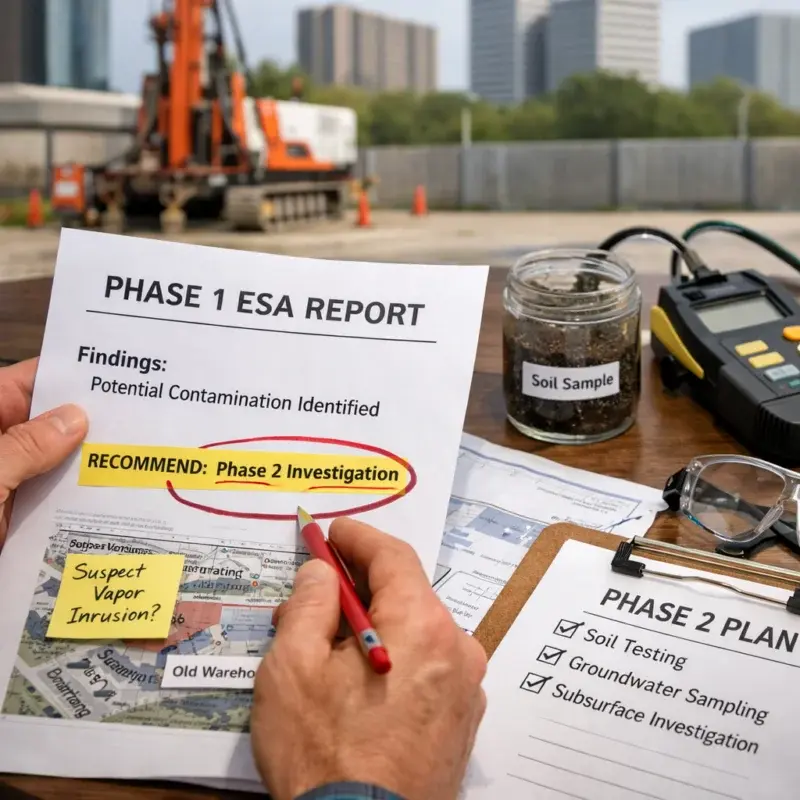
Then, review deliverable expectations. Lender-ready reports should tie findings back to Phase 1 observations and explain what is known and unknown. They should include sampling logs, chain-of-custody documentation, lab reports, and a clear conclusions section that supports decision-making. You want a report that reads as a decision document, not just appendices.
Finally, ask how the provider handles unexpected field conditions. For example, if borings encounter buried infrastructure, will they adjust the plan? If groundwater is deeper or shallower than expected, will the scope be revised transparently? These questions help you judge whether the provider is truly prepared for Houston commercial realities, not just a template workflow.
Provider strengths | Best fit | Questions to ask | Typical deliverables |
|---|---|---|---|
Consistent field execution and Houston scheduling familiarity | Projects where access and timelines are tight | How do you plan drilling around utilities and pavement? | Sampling logs, lab packages, integrated conclusions |
Strong record-to-field planning using TCEQ and federal sources | Sites with clear historical operations concerns | How does record review shape target sampling? | Work plan, targeted rationale, decision-focused summary |
Staged investigations aligned to milestones | Lender-driven approaches and phased redevelopment | What triggers expansion from Phase 2A to Phase 2B? | Draft results by stage, then final report |
Deliverables built for underwriting and closings | Refinance and lender review needs | How do you translate technical data for lenders? | Executive summary plus technical appendices |
Houston scheduling and access realities that shape Phase 2 fieldwork strategy
Phase 2 planning in Houston must account for local weather patterns and safe field operations. Heat and humidity can affect drilling conditions and crew safety. Summer storm seasons can also create sudden access restrictions and site safety limits.
Investigators also plan around water movement concerns in the Houston area. Buffalo Bayou and the Houston Ship Channel influence how stakeholders think about migration pathways. Phase 2 sampling design considers whether site conditions could support movement of impacted materials through subsurface or surface runoff pathways.
Access constraints are another reality in Houston. Downtown Houston and Midtown parcels can involve dense subsurface infrastructure. The Heights and Montrose areas may have mature utility networks that affect boring routes. Meanwhile, Westchase corridor properties can include heavy pavement and utility density that require careful planning for equipment placement and boring locations.
One practical takeaway is to come prepared for scope confirmation calls. Provide the confirmed property address, access points, and any existing Phase 1 report details. If your timeline includes a lender review meeting, share that milestone early. This reduces scope rework and helps keep the investigation aligned with your closing schedule.
A customer scenario is typical for many Houston transactions. A buyer had a Phase 1 report that suggested likely petroleum concerns near a former fueling area, and the lender needed clearer risk boundaries. The provider reviewed TCEQ record context, planned targeted borings around the hot spot, and included a groundwater decision branch in the work plan. When subsurface conditions differed slightly during drilling, the provider revised the scope transparently and updated the conclusions. That approach helped the buyer avoid a second investigation round during the refinancing window.
Commercial property histories in Houston that most often trigger Phase 2 investigation
Phase 2 is most likely when a property’s commercial history suggests plausible subsurface impacts. For former gas stations and auto-repair or fueling sites, USTs and petroleum-related releases are common concerns. Investigators often focus on likely source zones and possible migration pathways tied to those historical operations.
Dry cleaner sites often trigger Phase 2 due to chlorinated-solvent concerns, including solvents such as PCE., Phase 2 can help characterize soil and, when encountered, groundwater conditions relevant to vapor or exposure risk pathways. The deliverables should clarify whether contamination is present and, if so, how it is distributed.
Industrial and warehouse properties can also require Phase 2. Chemical and petroleum handling histories can change the analytical suite and the sampling design. Older redevelopment parcels may have historic uses that do not match today’s appearance. Even when the site “looks clean,” subsurface source areas can remain.
Rail-adjacent parcels and transportation-related histories also matter. Nearby industrial and transport activities can shape expectations for impacts that Phase 2 must confirm. The deeper insight is that surface redevelopment does not remove legacy risk by itself. Phase 2 must match the historical footprint and the decision goal for your current Houston transaction.
Cost and timeline expectations for Phase 2 Environmental Site Assessment in Houston, Texas
Phase 2 cost in Houston varies mainly with how much sampling and analysis is needed. The biggest drivers include the number of borings, sampling depths, whether groundwater sampling is required, and the analytical suite complexity. The report scope also matters because lender and buyer deliverables usually require integrated conclusions and clear documentation.
When you request a quote, ask what is included in the estimate. For example, clarify whether mobilization and drilling subcontracting are included. Also ask about lab validation steps, QA/QC reporting, and how unexpected findings change the estimate. Some providers treat add-on analytes as a separate line item, while others include contingency logic in their work plan.
Timeline varies too. Many Phase 2 projects involve scheduling lead time, drilling and sampling duration, laboratory turnaround, and data validation. Weather and site access can shift field schedules in the Houston area. Therefore, you should plan for schedule risk and ask for draft timing milestones, not only final report dates.
A practical way to avoid surprises is to request a work plan with decision checkpoints. For example, you can align draft results with your lender review meeting date. That helps prevent a scenario where the final report arrives too late for underwriting or permitting choices.
Credentials and deliverable quality checks that signal a trustworthy Phase 2 provider
One of the most important trust signals is whether an appropriately qualified Environmental Professional (EP) oversees Phase 2 decisions. Under EPA All Appropriate Inquiries concepts, an EP is defined at 40 CFR 312.10. This matters because the investigation must be guided by sound professional judgment, not just field activity.
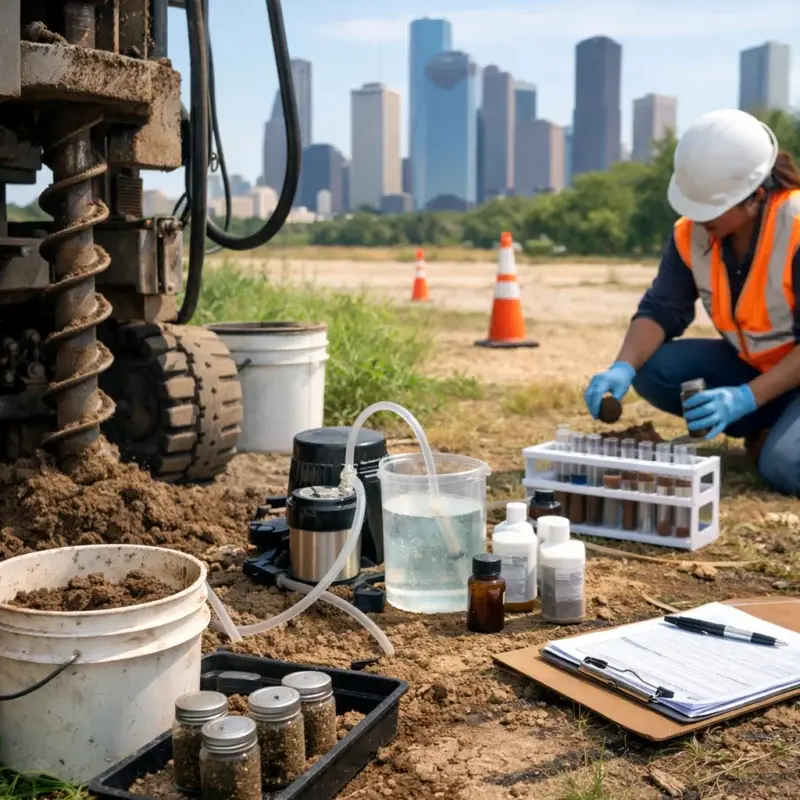
Next, evaluate QA/QC and chain-of-custody discipline. A strong Phase 2 report should show how samples were collected, handled, and documented from field to lab. It should also explain how analytical results are interpreted to support the conclusions. If documentation is thin, lenders and buyers can discount the findings.
Deliverable quality checks should include whether the report ties back to Phase 1 conditions. The best reports state what Phase 1 suggested, what Phase 2 sampled, and what the data means for the decision you face. They should also clearly describe uncertainties and limitations, including any constraints that affected sampling locations or depths.
Finally, look at communication quality. You want a provider that responds quickly when additional sampling is recommended. Red flags include vague conclusions that do not support underwriting needs. Another red flag is a report that does not clearly describe how scope changed after field discoveries.
How to request a Phase 2 quote and avoid scope rework for your Houston transaction
A smooth quote request starts with sharing your Phase 1 Environmental Site Assessment and transaction requirements. Provide the Phase 1 report, the property address in Houston, Texas, and any lender or closing timeline constraints. Also share the end use goal such as refinancing, lease-up, or construction planning.
Next, ask the provider to confirm what they will review and how they will shape the Phase 2 sampling plan. A good provider will identify target areas based on Phase 1 hot spots and property history. They will also discuss how they handle access constraints, utilities, and possible need for groundwater sampling if encountered.
Then, request clarity on deliverables and milestone dates. Ask for what will be included in draft and final outputs, and whether an executive summary is provided for lenders. If you have a review date in mind, ask the provider to build the work plan around it with decision checkpoints.
Finally, make sure you can support scheduling. Confirm property access points and identify any restrictions on drilling or pavement removal. When stakeholders provide this early, Phase 2 sampling is less likely to require rework. It also helps protect your transaction schedule during Houston’s heat and storm season.
Frequently asked questions about Phase 2 Environmental Site Assessment in Houston, Texas
How much does a Phase 2 Environmental Site Assessment cost in Houston, TX?
Pricing for a Phase 2 Environmental Site Assessment Houston Texas project varies based on the number of borings, sampling depths, and whether groundwater sampling is needed. It also depends on the analytical suite, lab QA/QC validation, and how lender-ready the report must be. Ask the provider what is included in the estimate and what changes would trigger add-on costs. A quote should reflect your Phase 1 findings, site constraints, and decision milestones.
How fast can I get a Phase 2 Environmental Site Assessment in Houston?
Timelines vary with drilling schedules, weather-related access constraints, and laboratory turnaround. Many projects move from fieldwork to draft results after lab analysis and data validation, then finalize after review. If initial samples show unexpected contamination, additional sampling can add time. For better predictability, ask for draft result milestones tied to your lender or closing schedule.
What triggers a Phase 2 Environmental Site Assessment after Phase 1 results?
Phase 2 is usually triggered when Phase 1 identifies recognized environmental conditions or data gaps that affect risk characterization. It may also be triggered when Phase 1 results are inconclusive due to sampling limitations. For Houston commercial deals, the trigger can also be the level of detail required for underwriting, redevelopment planning, or groundwater or vapor pathway evaluation.
What areas of a property are usually sampled during Phase 2?
Phase 2 sampling typically targets areas most likely to reflect historical releases. This can include suspected source zones, equipment locations, suspected former release areas, and areas identified as hot spots in Phase 1. Investigators may also include downgradient or adjacent areas when migration pathways need confirmation. The sampling plan should reflect both site layout and your end-use goals.
Does Phase 2 always include groundwater sampling?
No. Groundwater sampling is included when groundwater is encountered at relevant depths and when the decision needs groundwater characterization. If groundwater is not present or is not accessible as planned, the scope should adapt and document the limitation. A good provider explains whether groundwater sampling is expected and how the plan changes based on field findings.
How do TCEQ and federal records influence Phase 2 planning?
Record review helps identify where prior releases and related information suggest likely impact areas. In Houston, TCEQ records can inform UST/LUST information and reported releases that shape target sampling locations. Federal EPA databases used for due diligence can also support understanding of relevant historical sites and reported incidents. This record context helps Phase 2 focus on decision-critical areas rather than sampling randomly.
What deliverables do lenders and buyers typically expect at the end of Phase 2?
Lenders and buyers typically expect an integrated report that summarizes sampling methods, laboratory results, and clear conclusions tied to the decision goal. Reports often include sampling logs, chain-of-custody documentation, and lab analytical packages. The most useful deliverables also explain uncertainties or limitations, including any constraints encountered during drilling. An executive summary can be important for underwriting review.
How long is a Phase 1 Environmental Site Assessment valid for a transaction that may require Phase 2?
Under ASTM E1527-21 and EPA All Appropriate Inquiries concepts, a Phase 1 is generally considered current for 180 days. It is also commonly treated as viable up to about one year when required components are updated as appropriate. Your lender or closing party may impose stricter requirements. If your Phase 1 is older, discuss update options with your provider before planning Phase 2.
Who can perform a Phase 1 Environmental Site Assessment and oversee due diligence requirements?
Phase 1 work should be guided by a qualified Environmental Professional (EP). The EP role is defined under the EPA All Appropriate Inquiries rule at 40 CFR 312.10. An EP helps ensure that due diligence decisions are made based on professional judgment and the appropriate risk framework. For Phase 2 follow-on work, the EP should also oversee scope decisions when needed.
Conclusion: scoping Phase 2 to match your Houston decision helps reduce risk
Phase 2 Environmental Site Assessment in Houston, Texas is about resolving what Phase 1 could not confidently determine for your specific commercial transaction. When you align sampling with your end use, you get decision-ready data instead of an overly broad or vague investigation. That alignment matters for refinancing, redevelopment, and underwriting outcomes.
To protect your schedule, request a provider comparison based on work plan quality, QA/QC defensibility, and deliverable clarity. Ask how they will tailor Phase 2 to your Phase 1 findings, access constraints, and lender review needs. Also request milestone dates for draft and final outputs so you can manage schedule risk in Houston’s heat and storm season.
To request a quote, share your Phase 1 report, your Houston, Texas property address, and your transaction deadlines. Then schedule a consultation to confirm scope and avoid rework. If you are comparing providers, ask for the work plan details, the QA/QC approach, and what triggers any scope expansion. Phase 1 Enviro Pros can help you review your Phase 1 findings and outline a Phase 2 plan designed for lender and buyer needs.
Updated October 2026
Steve Medina — CEO
Founder of Savvy Inspections and Phase 1 Enviro Pros, specializing in commercial property inspections and environmental due diligence. He helps investors and real estate professionals uncover hidden risks—such as environmental concerns and permit issues—before they impact a deal. His work focuses on delivering clear, actionable insights that support smarter, more confident property decisions.
Related Articles


Comments