
Phase 1 Environmental Site Assessments Texas


Overview
Phase 1 Environmental Site Assessments in Texas are critical for identifying potential environmental liabilities during commercial real estate transactions. The assessment typically includes site reconnaissance, historical property research, regulatory records review, and interviews to identify potential environmental concerns and Recognized Environmental Conditions (RECs). Conducting the assessment in accordance with ASTM E1527-21 can support environmental due diligence and, when applicable, the federal All Appropriate Inquiries (AAI) requirements. By identifying concerns such as potential soil or groundwater contamination, a Phase 1 ESA provides buyers, lenders, investors, and developers with important information for evaluating environmental risk and making informed property decisions.
Introduction
A Phase 1 Environmental Site Assessment (ESA) is an essential step in property transactions across Texas. It helps identify potential or existing environmental contamination liabilities. This assessment is crucial for buyers, lenders, and developers to support environmental due diligence and evaluate potential environmental liabilities. In Texas, understanding the specific process, costs, and standards involved, such as ASTM E1527-21 and All Appropriate Inquiries (AAI), ensures a thorough evaluation. This article will explore the intricacies of Phase 1 Environmental Site Assessments in Texas, offering practical insights for those navigating property transactions in the Lone Star State.
Understanding Phase 1 Environmental Site Assessments in Texas
A Phase 1 ESA is a comprehensive evaluation of a property's environmental condition. It involves a thorough review of historical records, site visits, and interviews to identify any potential environmental liabilities. This assessment is vital in Texas, where diverse environmental factors, such as oil and gas activities, can impact property conditions. Conducting a Phase 1 ESA supports environmental due diligence by identifying potential environmental liabilities and Recognized Environmental Conditions (RECs) that could affect a property transaction, financing, or future development. In Texas, these assessments are particularly important due to the state's unique environmental challenges. Factors such as historical land use, proximity to industrial sites, and natural resource extraction can influence the assessment process. Conducting a Phase 1 ESA helps identify potential risks, such as soil contamination or groundwater pollution, which could affect property value and future development plans.
Texas Environmental Records and TCEQ
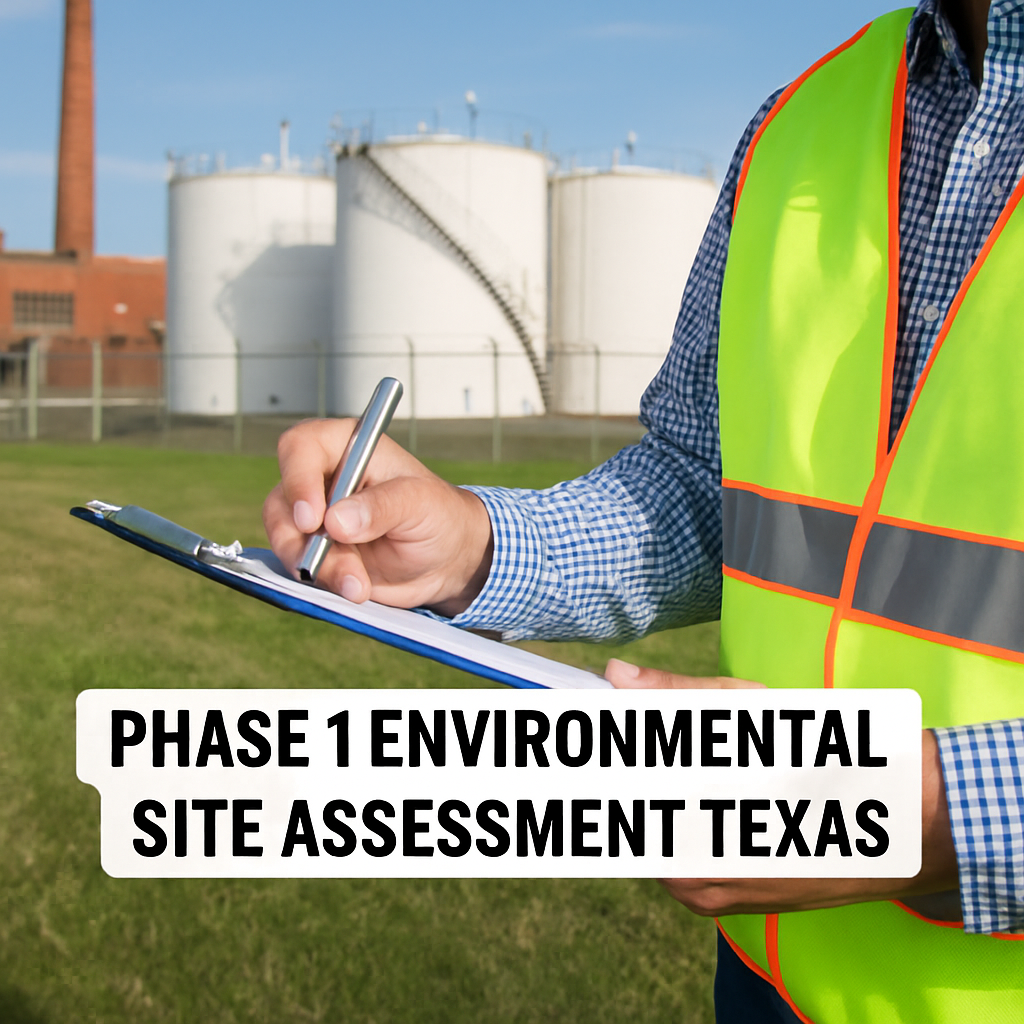
When conducting a Phase 1 Environmental Site Assessment in Texas, state environmental records can provide important information about a property's current and historical environmental conditions. The Texas Commission on Environmental Quality (TCEQ) maintains records and databases that environmental professionals may review as part of the environmental due diligence process.
Depending on the property and its surrounding area, a Phase 1 ESA may include research into petroleum storage tanks (PSTs), underground storage tanks (USTs), aboveground storage tanks (ASTs), leaking petroleum storage tanks (LPSTs), industrial and hazardous waste activities, dry cleaner sites, and other documented environmental concerns. These records can help identify past or present activities that may indicate potential environmental risks.
TCEQ records are especially valuable when evaluating Texas properties with histories involving gas stations, automotive facilities, dry cleaners, manufacturing operations, industrial facilities, petroleum storage, or other uses associated with hazardous substances or petroleum products. Information discovered during the records review is evaluated along with historical property research, site reconnaissance, interviews, and other available information to determine whether Recognized Environmental Conditions (RECs) may be present.
Reviewing appropriate Texas and federal environmental records helps provide a more complete picture of a property's environmental history. When combined with the other components of a Phase 1 ESA performed in accordance with ASTM E1527-21, this research can help buyers, lenders, investors, and developers better understand potential environmental risks before moving forward with a commercial real estate transaction.
Key Components of a Phase 1 ESA
A Phase 1 ESA comprises several crucial components, including site visits, historical research, and interviews. These elements work together to ensure a comprehensive environmental evaluation. Site visits allow assessors to visually inspect the property for signs of contamination, such as chemical spills or waste disposal sites. Historical research involves reviewing records to understand past land use, ownership, and any previous environmental incidents. This research is guided by the ASTM E1527-21 standard, which outlines the procedures and protocols for conducting an ESA. Additionally, the All Appropriate Inquiries (AAI) rule ensures that the assessment meets federal standards for environmental due diligence. Interviews with property owners, tenants, and local officials provide valuable insights into any known environmental issues. By combining these components, a Phase 1 ESA offers a detailed understanding of potential environmental risks, helping stakeholders make informed decisions.
How to Conduct a Phase 1 ESA in Texas
Conducting a Phase 1 ESA in Texas involves several steps tailored to the state's regulatory environment. Initially, a qualified environmental consultant is engaged to perform the assessment. The process typically begins with a site visit to identify any visible signs of contamination. Following this, a comprehensive review of historical records is conducted to uncover past land uses that may have led to environmental concerns. The timeline for completing a Phase 1 ESA can vary depending on the property's size and complexity. Generally, it takes between two to four weeks to finalize an assessment. Factors such as access to records and the availability of interviewees can affect this timeline. Once completed, the findings are documented in a detailed report, which outlines any recognized environmental conditions (RECs) and recommendations for further action, if necessary. Understanding how to interpret these findings is crucial. If environmental issues are identified, stakeholders may need to conduct a Phase 2 ESA, which involves more detailed sampling and analysis. By following a structured assessment process, property buyers and developers can effectively manage environmental risks.
Common Mistakes and Misconceptions
Several common mistakes can reduce the effectiveness of a Phase 1 Environmental Site Assessment. Inadequate historical research, incomplete regulatory records review, or insufficient site reconnaissance can result in important environmental concerns being overlooked. Another common misconception is that a Phase 1 ESA guarantees that a property is free from contamination. A Phase 1 ESA is an environmental due diligence assessment designed to identify potential environmental concerns and Recognized Environmental Conditions (RECs), but it generally does not include soil sampling, groundwater testing, or laboratory analysis. If a REC or other concern warrants further investigation, a Phase 2 Environmental Site Assessment may be recommended. To help ensure a thorough and reliable assessment, property buyers, lenders, investors, and developers should work with a qualified Environmental Professional familiar with ASTM E1527-21, Texas environmental records, and the environmental risks commonly associated with commercial properties throughout the state.
Choosing a Qualified Provider
Selecting the right provider for a Phase 1 Environmental Site Assessment in Texas is important for obtaining a thorough and reliable environmental due diligence assessment. When evaluating potential providers, consider their experience with commercial properties, knowledge of Texas environmental conditions, and familiarity with ASTM E1527-21 and All Appropriate Inquiries (AAI). A qualified provider should also understand environmental concerns commonly encountered in Texas, including properties associated with oil and gas operations, petroleum storage, industrial activities, dry cleaners, and other uses that may involve hazardous substances or petroleum products.
Phase 1 ESAs are commonly performed by environmental consulting firms, engineering firms, and specialized environmental assessment companies. When selecting a provider, look for an experienced Environmental Professional with the appropriate qualifications and a strong understanding of historical property research, site reconnaissance, regulatory database reviews, and Texas environmental records, including relevant information maintained by the Texas Commission on Environmental Quality (TCEQ). Local and regional experience can also help an environmental professional recognize conditions that may warrant additional investigation.
For additional guidance, review our tips on selecting the right environmental consultant. Choosing an experienced provider can help ensure that potential Recognized Environmental Conditions (RECs) are properly evaluated and that the Phase 1 ESA provides buyers, lenders, investors, and developers with reliable information for making informed commercial real estate decisions.
Advanced Considerations for Phase 1 ESAs
While a Phase 1 ESA provides a comprehensive initial assessment, certain scenarios may require further investigation. If significant environmental concerns are identified, a Phase 2 ESA might be necessary. This involves more detailed sampling and laboratory analysis to determine the extent of contamination. The findings of a Phase 1 ESA can significantly impact property value and transaction negotiations. Identifying environmental issues may lead to renegotiations or adjustments in property pricing. Additionally, stakeholders must consider the costs and time associated with remediation efforts if contamination is present. Addressing stakeholder concerns is also a critical part of the process. Clear communication and transparency about findings and recommendations can help manage expectations and facilitate informed decision-making. By understanding the potential implications of a Phase 1 ESA, stakeholders can navigate property transactions with confidence.
Frequently Asked Questions About Phase 1 Environmental Site Assessments Texas
What is the cost of a Phase 1 ESA in Texas?
The cost of a Phase 1 ESA in Texas can vary based on factors like property size, location, and complexity. Typically, prices range from $2,000 to $5,000. For more details on cost factors influencing assessments, consult with a qualified provider for a detailed quote.
How long does a Phase 1 ESA take to complete?
A standard Phase 1 ESA in Texas usually takes between two to four weeks to complete. Delays may occur due to challenges in accessing historical records or scheduling site visits and interviews.
Are Phase 1 ESAs mandatory for all property transactions?
Phase 1 ESAs are not required for every transaction, but they are often mandated by lenders or investors as part of the due diligence process. They are particularly important for commercial properties and sites with a history of industrial use.
What happens if a Phase 1 ESA identifies environmental issues?
If environmental issues are identified, further investigation through a Phase 2 ESA may be necessary. This involves detailed sampling and analysis to understand the extent of contamination and develop a remediation plan.
Can a Phase 1 ESA be reused for multiple transactions?
A Phase 1 ESA can be reused if it is recent, typically within 180 days. However, significant changes to the property or its use may necessitate a new assessment.
What qualifications should a Phase 1 ESA provider have?
A qualified Phase 1 ESA provider should have experience, certifications, and familiarity with local regulations. Look for providers with a strong track record and positive client feedback.
How does a Phase 1 ESA differ from a Phase 2 ESA?
A Phase 1 ESA involves a preliminary assessment of potential environmental risks, while a Phase 2 ESA includes detailed sampling and analysis to confirm and quantify contamination.
What role do Texas environmental records play in a Phase 1 ESA?
Texas environmental records can provide important information about past and present activities that may affect a commercial property. During a Phase 1 ESA, an environmental professional may review records from the Texas Commission on Environmental Quality (TCEQ) and other appropriate state and federal sources to identify potential environmental concerns. These records are evaluated along with historical research, site reconnaissance, interviews, and other information when determining whether Recognized Environmental Conditions (RECs) may be present.
Why is the ASTM E1527-21 standard important for Phase 1 ESAs?
The ASTM E1527-21 standard provides a framework for conducting Phase 1 ESAs. It ensures that assessments are thorough, consistent, and compliant with federal requirements for environmental due diligence.
Conclusion
Phase 1 Environmental Site Assessments are an important component of environmental due diligence for commercial property transactions in Texas. They help identify potential environmental concerns and Recognized Environmental Conditions (RECs) that could affect a transaction, financing, property value, or future development. By understanding the Phase 1 ESA process and working with a qualified environmental professional, buyers, lenders, investors, and developers can make better-informed decisions about potential environmental risks associated with a property.
Updated September 2026
Your Next Steps!
To ensure a successful property transaction in Texas, it's essential to engage a qualified environmental consultant for a Phase 1 Environmental Site Assessment. This step is important for identifying potential environmental concerns and supporting environmental due diligence before completing a commercial property transaction. Understanding the findings of a Phase 1 ESA can inform your decisions and help manage any identified risks effectively.
Take the initiative today! Contact Phase 1 Enviro Pros to schedule your comprehensive environmental site assessment. Our experienced team is ready to guide you through the process, providing thorough environmental due diligence evaluations for Texas commercial property transactions.
Steve Madina — CEO
Founder of Savvy Inspections and Phase 1 Enviro Pros, specializing in commercial property inspections and environmental due diligence. He helps investors and real estate professionals uncover hidden risks—such as environmental concerns and permit issues—before they impact a deal. His work focuses on delivering clear, actionable insights that support smarter, more confident property decisions.
Comments