

ASTM E1527-21: Understanding All Appropriate Inquiry

Overview
ASTM E1527-21 is a crucial standard for conducting All Appropriate Inquiry (AAI) in environmental due diligence during property transactions. It outlines the process for environmental site assessments to identify potential contamination risks, ensuring compliance and risk management. The standard has evolved to address contemporary environmental concerns and legal requirements, incorporating advancements in environmental science. Understanding ASTM E1527-21 is essential for reducing liability and making informed decisions in real estate transactions.
Contents
This article focuses on ASTM E1527-21; where relevant we also address ASTM E1527-21 all appropriate inquiry without making speed or the keyword phrase the sole subject of the piece.
The ASTM E1527-21 standard is crucial for conducting All Appropriate Inquiry (AAI) in environmental due diligence, specifically during property transactions. This standard outlines the process of environmental site assessments (ESAs) to help identify potential contamination risks associated with a property. Understanding ASTM E1527-21 is vital for compliance and effective risk management, as it provides a structured approach to evaluating environmental conditions, thereby reducing liability and ensuring informed decision-making in real estate transactions.
Overview of ASTM E1527-21
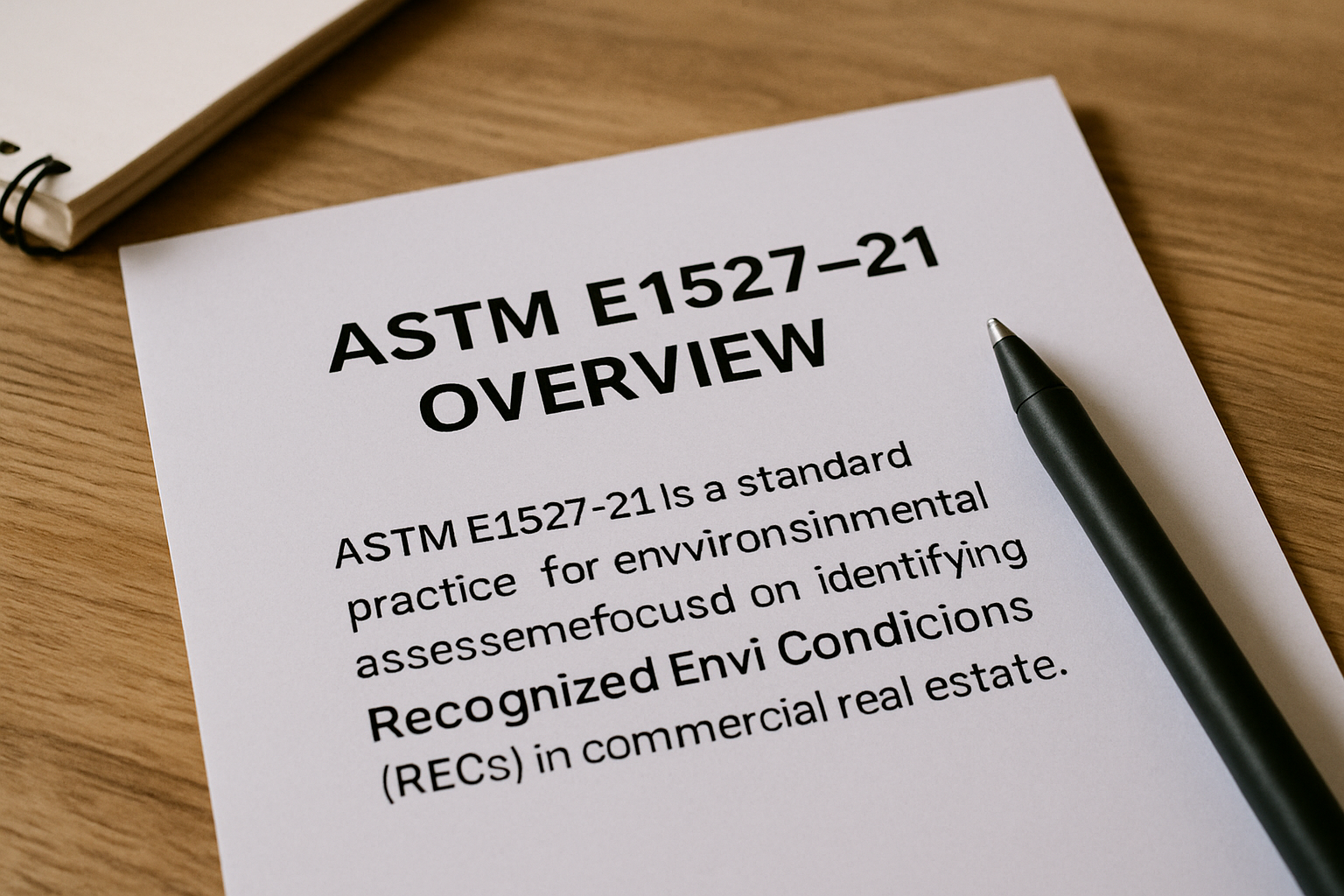
ASTM E1527-21 is a standard practice for environmental site assessments, primarily focused on identifying Recognized Environmental Conditions (RECs) in commercial real estate. It serves as a guide for conducting Phase I ESAs, which are critical in the process of environmental due diligence. The standard has evolved from previous versions to address contemporary environmental concerns and legal requirements.
Since its inception, ASTM E1527 has undergone several revisions to stay aligned with regulatory changes and industry needs. The 2021 update, ASTM E1527-21, incorporates advancements in environmental science and clarifies previous ambiguities. This evolution ensures that the standard remains relevant and effective in assessing potential environmental liabilities.
The term "All Appropriate Inquiry" (AAI) refers to the legal process required to qualify for certain landowner liability protections under the Comprehensive Environmental Response, Compensation, and Liability Act (CERCLA). ASTM E1527-21 outlines how AAI is conducted within the framework of ESAs, ensuring that property transactions are conducted with a thorough understanding of environmental risks.
Key Components of ASTM E1527-21
The ASTM E1527-21 standard encompasses several key elements essential for conducting a comprehensive ESA. It establishes the scope and methodology for environmental investigations, including historical research, site inspections, and interviews with knowledgeable parties. These components are designed to identify RECs, which are potential environmental liabilities that could impact a property's value or use.
Recognized Environmental Conditions (RECs) are pivotal in the assessment process. They indicate the presence or likely presence of hazardous substances or petroleum products on a property. Identifying RECs allows potential buyers or investors to make informed decisions and negotiate terms that mitigate environmental risks.
User responsibilities and the role of environmental professionals are also emphasized in ASTM E1527-21. Users, typically property buyers or investors, are required to provide accurate property information and disclose any known environmental issues. Environmental professionals, on the other hand, must possess the necessary qualifications to conduct assessments, ensuring that all findings are credible and comprehensive.
How to Conduct All Appropriate Inquiry Under ASTM E1527-21
Conducting an ESA in accordance with ASTM E1527-21 involves several methodical steps. The process begins with a thorough review of historical property records to understand past uses and potential contamination sources. This is followed by a physical site inspection, which assesses current conditions and identifies any visible signs of environmental concern.
During the inquiry, the assessor evaluates historical use and property conditions by gathering information from public records, aerial photographs, and interviews with past and present property managers. This comprehensive approach helps to identify any discrepancies or inconsistencies that may indicate environmental risks.
Documentation and reporting are crucial in the ASTM E1527-21 assessment process. Detailed reports provide a transparent account of findings, supporting informed decision-making and ensuring compliance with legal and regulatory requirements. Proper documentation also protects stakeholders from potential liabilities by demonstrating due diligence.
Common Mistakes and Misconceptions
Interpreting or applying ASTM E1527-21 can sometimes lead to errors that compromise the integrity of an ESA. One common mistake is failing to recognize the limitations of the standard, which can result in incomplete assessments. ASTM E1527-21 is designed to identify RECs, not to provide a complete environmental risk analysis.
Misconceptions about the scope of ASTM E1527-21 often arise, leading some to believe it addresses all environmental issues. However, the standard focuses on identifying potential contamination risks and does not cover broader environmental concerns like endangered species or wetlands protection.
Non-compliance or incomplete assessments can have serious consequences, including legal liabilities and financial losses. It's essential to follow the standard meticulously and engage qualified environmental professionals to ensure accurate and comprehensive assessments.
Comparing ASTM E1527-21 with Other Environmental Standards
ASTM E1527-21 distinguishes itself from previous versions and other environmental standards by its specificity in addressing RECs. Compared to earlier iterations, the 2021 update provides clearer guidelines and incorporates recent regulatory changes to enhance its applicability in modern real estate transactions.
Alternative approaches to environmental site assessments exist, such as the ASTM E1903 standard for Phase II ESAs, which involves more invasive testing and analysis. While Phase I ESAs under ASTM E1527-21 focus on historical and current data, Phase II delves deeper into soil and groundwater testing when initial assessments indicate potential contamination.
The choice between ASTM E1527-21 and other standards depends on the specific needs and circumstances of the property transaction. While ASTM E1527-21 offers a cost-effective and non-invasive initial assessment, it may need to be supplemented with more detailed investigations if significant risks are identified.
Advanced Considerations in Applying ASTM E1527-21
Applying ASTM E1527-21 in complex scenarios requires an understanding of edge cases and exceptions. Properties with a long history of industrial use or those located near known contamination sites may present unique challenges that require additional scrutiny and investigation.
Recent legal and regulatory changes can impact the application of ASTM E1527-21. Practitioners must stay informed about evolving environmental laws and guidelines to ensure their assessments remain compliant and effective. For instance, changes in state-specific regulations may necessitate adjustments to standard procedures.
Environmental professionals often face objections and challenges, such as resistance from property owners or discrepancies in historical data. Addressing these issues requires clear communication, thorough documentation, and a commitment to maintaining high standards of practice.
Your Next Steps!
To ensure compliance with ASTM E1527-21, begin by engaging a qualified environmental professional to conduct a Phase I Environmental Site Assessment (ESA). This step is crucial for identifying Recognized Environmental Conditions (RECs) and mitigating potential environmental liabilities during property transactions. Understanding and applying this standard now can protect you from future legal and financial risks.
Phase 1 Enviro Pros specializes in assisting property buyers, investors, and developers with comprehensive environmental assessments, particularly in commercial real estate transactions. If you're considering a property purchase or investment, contact us to initiate a thorough ESA process. Our expertise ensures that you have all the necessary information to make informed decisions and negotiate effectively.
FAQs
What is ASTM E1527-21, and why is it important?
ASTM E1527-21 is a standard for conducting Phase I Environmental Site Assessments. It is essential because it helps identify potential environmental liabilities, ensuring compliance and informed decision-making in property transactions.
How does ASTM E1527-21 differ from previous versions?
The 2021 update provides clearer guidelines and incorporates recent legal and regulatory changes, improving its applicability and effectiveness in identifying recognized environmental conditions.
What are Recognized Environmental Conditions (RECs)?
RECs are the presence or likely presence of hazardous substances or petroleum products on a property, which could impact its use or value and necessitate further investigation or remediation.
Why is documentation important in ASTM E1527-21 assessments?
Thorough documentation ensures transparency, supports informed decision-making, and provides legal protection by demonstrating due diligence and compliance with the standard.
What are common pitfalls when conducting an ASTM E1527-21 assessment?
Common pitfalls include misinterpreting the scope of the standard, failing to recognize its limitations, and not engaging qualified professionals, which can lead to incomplete assessments and legal liabilities.
How often should ASTM E1527-21 assessments be updated?
Assessments should be updated whenever there are significant changes to a property's use or condition, or when a transaction is anticipated, to ensure that the information remains current and accurate.
What qualifications should an environmental professional have?
Environmental professionals should have relevant education, experience, and credentials in environmental science or engineering to conduct accurate and credible assessments under ASTM E1527-21.
Can ASTM E1527-21 be used internationally?
While ASTM E1527-21 is primarily a U.S. standard, its principles can be adapted for international use, but local environmental regulations and practices should also be considered.
How does ASTM E1527-21 impact property transactions?
The standard significantly influences property transactions by identifying potential environmental risks, affecting negotiations, property value, and liability considerations for buyers and sellers. For more on the impact on selling properties, see this resource.
Conclusion
In conclusion, ASTM E1527-21 is a vital standard for conducting thorough environmental due diligence in property transactions. By following its guidelines, stakeholders can mitigate risks and ensure compliance with environmental regulations. Engaging qualified environmental professionals is essential for implementing the standard effectively. For more guidance, explore resources for mastering assessments or consider conducting an effective assessment to ensure a comprehensive evaluation of environmental risks.
As the landscape of environmental assessments continues to evolve, staying informed about navigating new standards and technologies is crucial for success in real estate transactions.
Updated October 2026
Steve Madina — CEO
Founder of Savvy Inspections and Phase 1 Enviro Pros, specializing in commercial property inspections and environmental due diligence. He helps investors and real estate professionals uncover hidden risks—such as environmental concerns and permit issues—before they impact a deal. His work focuses on delivering clear, actionable insights that support smarter, more confident property decisions.
Comments